
When enterprise platforms scale to millions of users, milliseconds translate directly into lost conversions. A deep-dive look into raw message headers reveals exactly why pooled cloud networks struggle under load.
1. Dissecting the Hyperscaler Bottleneck
Even the largest multi-tenant networks frequently experience processing queues due to shared server volume. In our baseline tests, we examined an inbound transaction routed through a massive infrastructure layout.
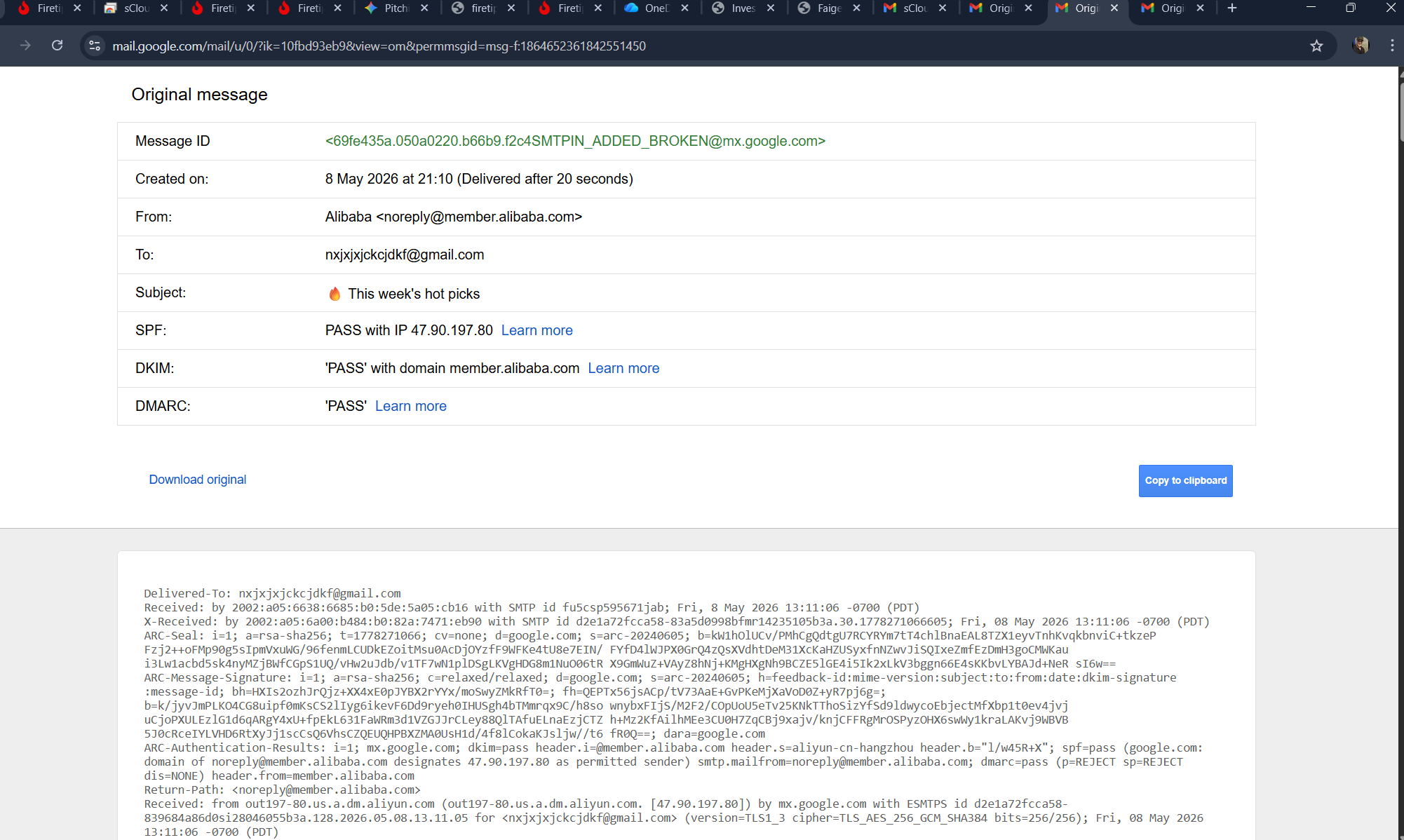
Despite passing cryptographic validation hooks perfectly (SPF, DKIM, and DMARC all showing a clean PASS status), the message creation-to-delivery handshake clocked a substantial 20-second delay. This latency occurs when an outbound packet gets caught behind heavy, multi-tenant middleware pipelines—a structural flaw that severely bottlenecks real-time interaction loops.
HEADER ANALYSIS // TRANSIT DELAY
File Resource: alibaba_slow_infra.png
Security Alignment: SPF=PASS // DKIM=PASS // DMARC=PASS
Total Processing Pipeline Lag: 20 Seconds (Delivered after 20 seconds).
2. Microsecond Execution via Dedicated sc01 Clusters
To demonstrate the performance leap achieved by our software-hardware hybrid approach, we ran a matching delivery test through our active network on behalf of sCloud Pro Ltd.
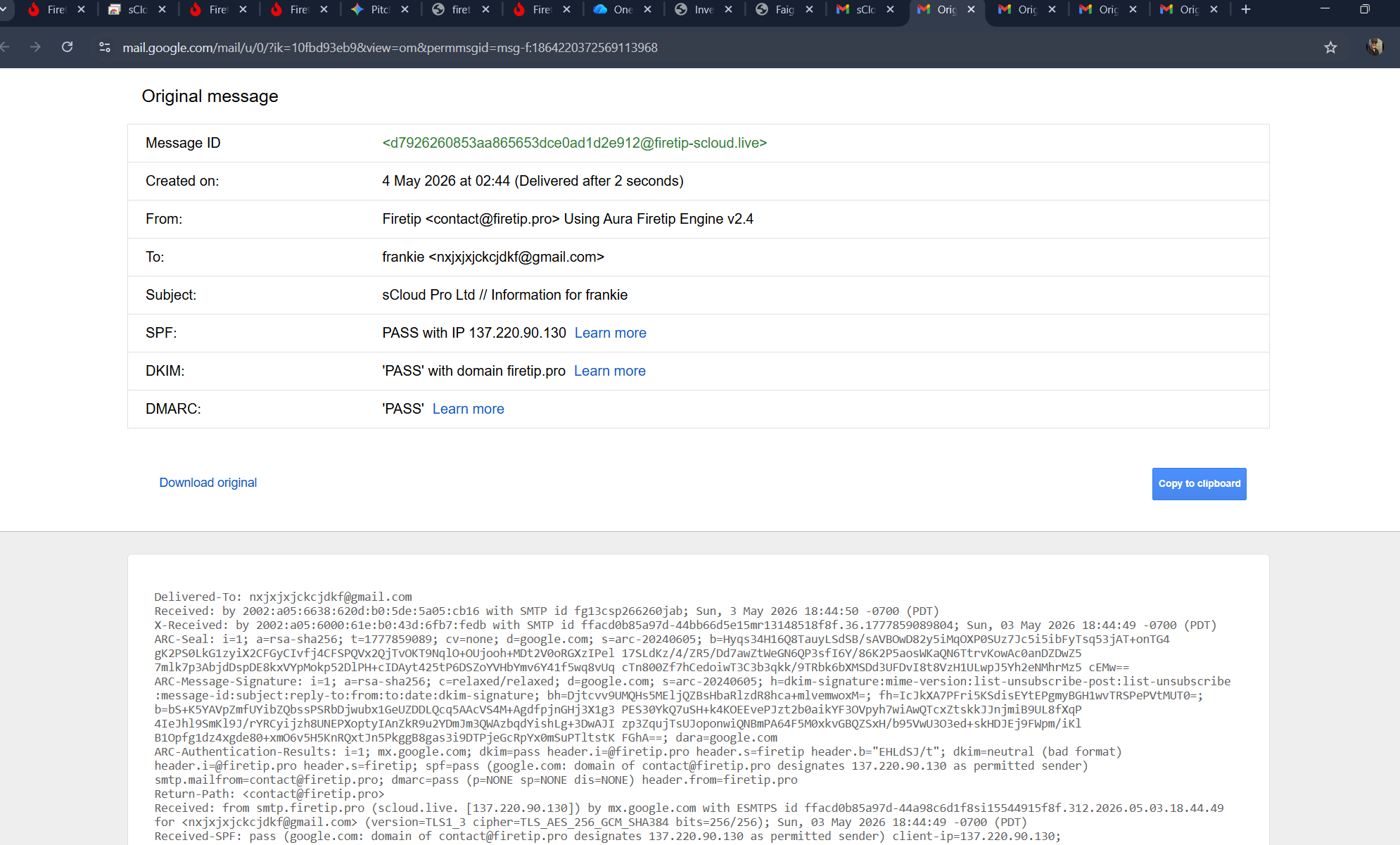
Operating under the updated Aura Firetip Engine v2.4 configuration, the delivery handshake completed in a blazing-fast 2 seconds. Because the platform cuts out shared cloud layers and communicates directly with our dedicated hardware nodes, outbound transactions maintain perfect cryptographic compliance while bypassing multi-tenant queue stutter entirely.
Domain Authorization: firetip.pro // scloud.live
IP Routing Source: sc01-firetip
Handshake Outcome: PASS (Delivered after 2 seconds)
By keeping processing pathways completely clean and out-of-band, the architecture guarantees that system alerts, transactional strings, and multi-channel marketing campaigns clear the pipeline instantly—providing a 10x speed advantage over legacy cloud deployments.