
When sending high-volume transactional notifications or broad multi-channel email campaigns, traditional networking rules break down. Relying on generic cloud-based SMTP relays forces your data packets through multi-tenant queues that introduce unpredictable processing bottlenecks.
To establish absolute delivery certainty, the outbound pipeline must be treated as a strict hybrid of specialized transmission software and dedicated bare-metal hardware routing. By decoupling transmission loops from virtualized cloud hypervisors, we ensure that every single data payload clears the local buffer and hits the recipient gateway with second precision.
1. The Fallacy of Shared Cloud Relays vs. Bare-Metal Isolation
Standard marketing platforms use virtualized cloud environments to run their mail transfer agents (MTAs). While this allows them to provision instances rapidly, it exposes users to "noisy neighbor" syndrome. If another tenant on your virtual cluster floods an outbound relay with unverified contact strings, the underlying network interfaces experience immediate socket exhaustion. Your campaigns stall, waiting for free network threads to open up.

Firetip’s dreadnought 01 matrix circumvents this layout entirely. Outbound traffic is locked to sovereign sc01 hardware nodes. By routing campaigns over our own dedicated IP footprints, the engine executes direct network handshakes with inbound destination servers. There are no shared middleware queues, no variable routing proxy states, and no multi-tenant throttling constraints to bypass.
2. Optimizing Asynchronous JavaScript Socket Management
At the software layer, handling millions of simultaneous outbound events requires a completely non-blocking execution cycle. Traditional thread-per-connection models fall apart under this intensity, consuming massive system memory just to maintain idle connection handshakes.
The dreadnought 01 system operates via specialized asynchronous JavaScript loops that manage low-level network sockets directly. When a massive blast is executed, the engine compiles the message payloads natively and fires them out-of-band across hundreds of parallel socket pipes simultaneously. This allows the system to sustain exceptional delivery speeds while keeping the front-end interface light, fluid, and completely free from rendering lockups.
3. Real-Time Telemetry and Event Redirection Loops
High-speed delivery is only half the battle; tracking engagement safely is the other. Traditional systems rely on heavy redirect scripts that route users through slow cloud analytical databases before forwarding them to their destination. This degrades user experience and hurts link conversion metrics.
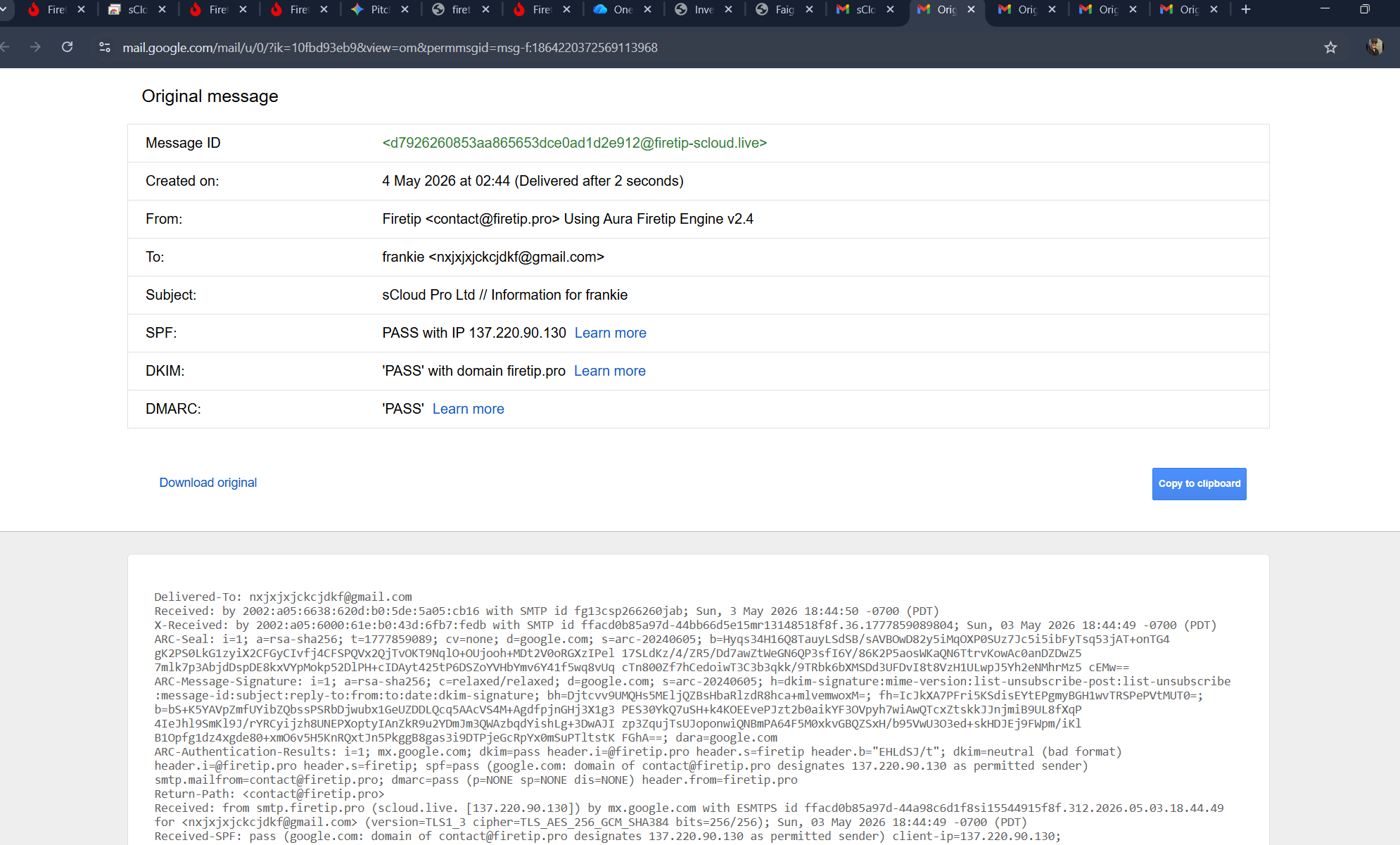
Our platform resolves this by using ultra-fast, asynchronous event webhooks. The moment an email link is clicked or an inbound status verification is triggered, our real-time listening badge catches the interaction out-of-band. The tracking parameters are instantly processed, logging the exact telemetry handshake to your database while the user is forwarded to their destination link without a single millisecond of visible delay. This delivers pristine analytical accuracy without sacrificing delivery performance.
TECHNICAL PERFORMANCE OVERVIEW // DIRECT ROUTING
- Outbound Transport Layer: Custom Bare-Metal SMTP Sockets
- Hardware Core Anchor: sc01 Node Deployment
- Transmission Mechanism: Non-Blocking Asynchronous JS Pipelines
- Telemetry Status: Real-Time Verification Listening Active